

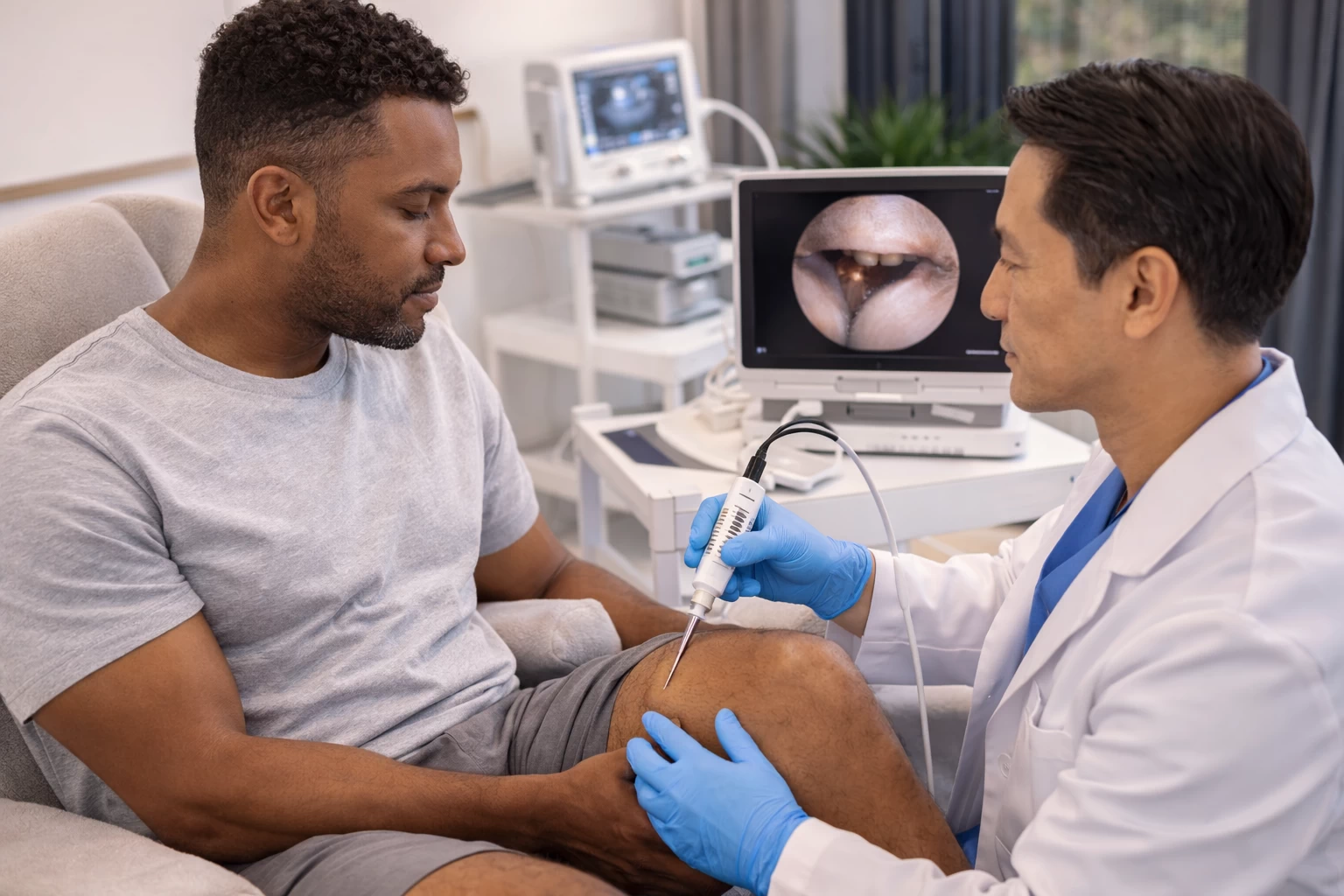
NanoScope™ Needle Arthroscopy
NanoScope™ Needle Arthroscopy is a minimally invasive diagnostic and treatment procedure used to evaluate joint conditions with exceptional precision. This advanced technology allows physicians to examine the inside of a joint using a tiny camera that is inserted through a needle-sized instrument. As a result, healthcare providers can assess joint structures directly while minimizing tissue disruption and recovery time.
Because the procedure can often be performed in an outpatient setting, NanoScope™ Needle Arthroscopy has become an increasingly valuable tool in modern orthopedic and regenerative medicine. Physicians use this technology to diagnose joint problems, confirm imaging findings, and guide targeted treatments that support joint health and mobility.
What Is NanoScope™ Needle Arthroscopy?
NanoScope™ Needle Arthroscopy is a specialized arthroscopic technique that uses an ultra-small camera system to visualize joint structures in real time. Unlike traditional arthroscopy, which requires larger incisions and operating room procedures, this needle-based approach allows physicians to examine joints through a very small entry point.
During the procedure, a healthcare provider inserts the NanoScope camera into the joint space. This camera provides high-resolution images of structures such as cartilage, ligaments, and synovial tissue. Consequently, physicians can observe the joint directly and identify abnormalities that may not always appear clearly on imaging tests like MRI or X-rays.
Because of its minimally invasive nature, the procedure typically causes less discomfort and allows for quicker recovery compared to conventional surgical techniques.
How Needle Arthroscopy Works
Healthy joints rely on smooth cartilage surfaces, stable ligaments, and balanced synovial fluid to support movement. However, injuries, degeneration, or inflammation can disrupt these structures and lead to pain or reduced mobility.
Needle arthroscopy allows physicians to inspect the joint interior in real time. First, the healthcare provider numbs the treatment area and inserts the small camera into the joint. Next, the device transmits live images to a monitor, enabling the physician to carefully evaluate the condition of the joint structures.
In some cases, providers can also perform targeted treatments during the same procedure. For example, they may remove small fragments of damaged tissue or guide regenerative injections to precise areas of injury.
Joints Commonly Evaluated With NanoScope™ Technology
Physicians frequently use NanoScope™ Needle Arthroscopy to examine several major joints in the body. Because the device is small and flexible, it can access areas that may otherwise require more invasive procedures.
Common joints evaluated include:
-
Knee joint structures
-
Shoulder joint tissues
-
Ankle cartilage and ligaments
-
Elbow joint components
-
Certain wrist conditions
Additionally, the procedure helps physicians gain a clearer understanding of joint damage and determine the most appropriate treatment approach.
Potential Benefits of NanoScope™ Needle Arthroscopy
When performed by trained medical professionals, this minimally invasive arthroscopic technique may provide several advantages. Although individual outcomes vary, many patients appreciate the convenience and precision associated with this diagnostic method.
Possible benefits include:
-
Highly detailed visualization of joint structures
-
Minimally invasive diagnostic approach
-
Reduced need for traditional surgical procedures
-
Faster recovery compared to conventional arthroscopy
-
Ability to guide targeted treatments in real time
-
Improved diagnostic accuracy for joint conditions
Furthermore, this technology allows patients and physicians to view the joint condition together, which can improve understanding of treatment options.
Who May Benefit From Needle Arthroscopy?
Individuals experiencing persistent joint pain or limited mobility may benefit from a more precise diagnostic evaluation. For example, patients with suspected cartilage damage, ligament injuries, or chronic joint discomfort sometimes undergo needle arthroscopy when imaging studies provide inconclusive results.
Athletes and physically active individuals may also benefit from this procedure because it allows physicians to identify injuries and develop targeted treatment plans more efficiently.
However, a comprehensive medical assessment is necessary before scheduling the procedure. Healthcare providers review symptoms, imaging results, and medical history to determine whether needle arthroscopy is appropriate.
What to Expect During the Procedure
A typical NanoScope™ Needle Arthroscopy procedure usually takes place in a clinical or outpatient setting. First, the physician applies local anesthesia to ensure patient comfort. Next, the small camera device is inserted into the joint through a needle-sized opening.
Once the camera is in position, the physician examines the joint structures while viewing live images on a monitor. The procedure typically lasts between 20 and 40 minutes, depending on the complexity of the evaluation.
Because the technique is minimally invasive, most patients return to normal activities relatively quickly after the procedure.
Integrating Needle Arthroscopy Into a Joint Care Plan
Although NanoScope™ Needle Arthroscopy provides valuable diagnostic insight, it is often part of a broader joint health strategy. Physicians may combine the procedure with regenerative therapies, physical rehabilitation, and lifestyle modifications.
For instance, treatments such as platelet-rich plasma injections, targeted exercise programs, and anti-inflammatory strategies may support long-term joint health.
Consequently, patients can benefit from a comprehensive care plan designed to improve mobility, reduce discomfort, and maintain healthy joint function.
Frequently Asked Questions
Is NanoScope™ Needle Arthroscopy painful?
Most patients experience minimal discomfort because the procedure is performed with local anesthesia.
How long does recovery take?
Recovery time is generally short, and many individuals return to normal activities within a few days.
Why choose needle arthroscopy instead of MRI?
While MRI provides valuable imaging, needle arthroscopy allows physicians to view joint structures directly in real time.
-
Phone: (561) 654-9747
-
Opening Hours: Monday – Friday: 9AM – 6PM